Best Heavy Duty Filter Manufacturer China: From Cheap Copies to Global OEM Hub (2026 Guide)
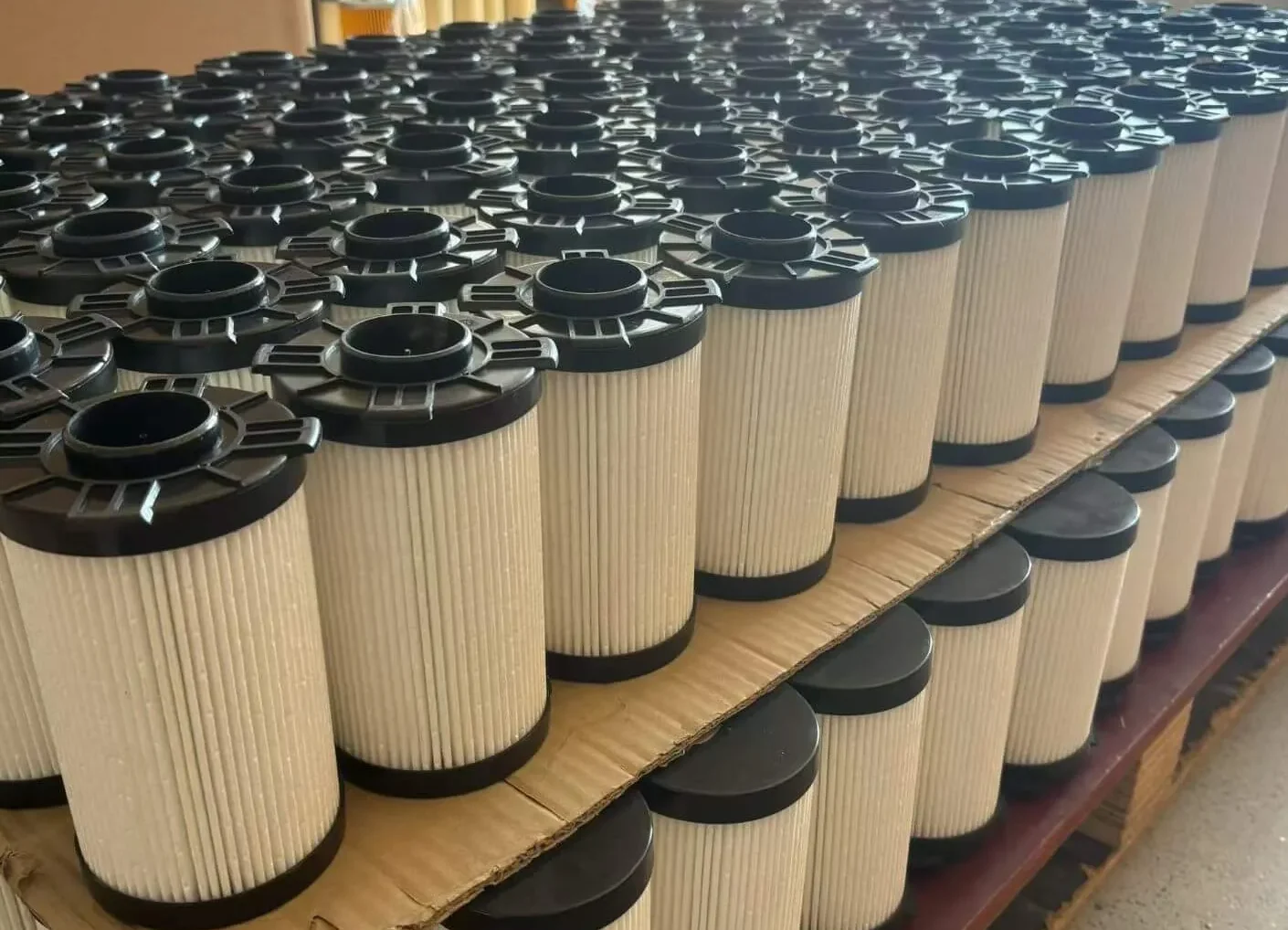 The global industrial and heavy-duty filtration market is undergoing a profound structural transformation. This is driven by an unprecedented convergence of stringent environmental regulations, advanced manufacturing technologies, and shifting global supply chain architectures.
In 2025, the global industrial filtration market reached a staggering USD 53.5 billion, and it is firmly projected to escalate to USD 55.2 billion by the end of 2026. Driven by an annualized growth rate (CAGR) hovering between 4.2% and 6.0% depending on the specific sector, long-term forecasts indicate the broader market will approach the USD 79.9 billion to USD 153.0 billion mark by 2035. North America currently dominates the revenue share at approximately 41.9%, but the Asia-Pacific region is accelerating as the undisputed core of global production.
For decades, international procurement directors, heavy machinery owners, and fleet maintenance managers operating in diverse and punishing environments operated under a persistent, outdated stereotype. This stereotype dictated that Chinese-manufactured aftermarket filters were inherently inferior, functioning as cheaply reverse-engineered cellulose components prone to bypass leaks, rapid media degradation, and premature structural collapse.
In the realities of the 2026 global supply chain, this narrative is not only mathematically false; it is an incredibly costly misconception that inflates operating budgets and severely restricts supply chain resilience.
If you are searching for a premier heavy duty filter manufacturer China serves as the undisputed global Original Equipment Manufacturer (OEM) hub for the world’s most stringent heavy-duty filtration brands. This comprehensive research report systematically dismantles the legacy myths surrounding Chinese heavy-duty filter production.
By examining regulatory forcing functions, geographical industrial clusters, advanced metallurgical and chemical manufacturing upgrades, and strict international testing standards, this guide provides global procurement professionals with the granular engineering data required to source Tier-1 heavy-duty filters directly from the source.
Table of Contents
1. The Evolution: From Reverse-Engineering to Global OEM Hub
The catalyst for the modernization of China’s heavy-duty filtration industry was not merely a desire for higher quality or market share, but a strict, non-negotiable legal mandate.
Over the past decade, the phased implementations of Euro VI standards in Europe, the Environmental Protection Agency’s (EPA) 2024/2027 heavy-duty emissions regulations in the United States, and China’s own ultra-strict China VI (and subsequently China 7) standards forced a comprehensive paradigm shift in exhaust after-treatment and internal fluid cleanliness.
China VI standards, which were fully implemented for heavy-duty commercial vehicles in a phased approach concluding with the rigorous China VI-b in July 2023, demanded an astonishing 82% reduction in particulate matter (PM) and an 86% reduction in nitrogen oxides (NOx) compared to previous iterations. Furthermore, the regulations mandated the integration of advanced Diesel Particulate Filters (DPFs) capable of trapping ultra-fine particulates larger than 23 nanometers.
The engineering implications of these regulations were profound. To meet the stringent Real-World Driving Emissions (RDE) compliance protocols under these standards, modern diesel and gasoline engines required advanced, high-pressure fuel injection systems that operate at immense pressures. These high-tolerance injection systems are highly susceptible to catastrophic failure if even microscopic contaminants are present.
To support the heavy-duty durability requirement of 700,000 kilometers for commercial diesel trucks under China VI, Chinese factories were forced to abandon manual assembly entirely. This regulatory pressure necessitated the adoption of two critical manufacturing upgrades that define the modern Tier-1 facility: automated rotary pleating and precision epoxy potting.
The Shift to Automated Rotary Pleating Technologies
Historically, many low-end filtration facilities utilized basic, manually operated blade pleaters. While blade pleating systems are versatile, older legacy systems were relatively slow and highly prone to irregular pleat spacing when operated without modern digital controls. To meet OEM specifications, Tier-1 Chinese factories transitioned heavily to advanced automated rotary pleating machinery.
Rotary pleating machines are specifically engineered for applications where the filter media and pleat height remain consistent, making them ideal for the mass production of uniform automotive and industrial heavy-duty filters. These advanced systems operate at exceptional speeds and utilize programmable media thickness compensation.
Uniformity is not merely an aesthetic consideration; it is a critical engineering requirement. In heavy-duty hydraulic and lubrication applications, irregular pleats create localized high-velocity fluid channels. By standardizing automated rotary pleating, Tier-1 Chinese factories successfully replicated the exact structural integrity required to support Euro VI and China VI engine standards.
Precision Epoxy Potting vs. Legacy Plastisol
A heavy-duty filter’s media is only as effective as the chemical seal bonding it to the metallic or synthetic end caps. If the adhesive fails, unfiltered fluid bypasses the media entirely, rendering the filter useless.
When operating as a top heavy duty filter manufacturer China based facilities utilize precision epoxy potting compounds to secure the filtration media. High-performance thermosetting epoxy resins provide superior chemical resistance against acidic engine oils, unburned hydrocarbons, diesel fuels, and highly caustic synthetic hydraulic fluids.
From a mechanical engineering perspective, epoxies provide some of the highest bond strengths available in the industrial adhesive sector, often exceeding 15 MPa of tensile strength. This high adhesion ensures that the potting material remains completely bonded even under severe mechanical vibration, physical shock, or cold-start pressure surges. Advanced Chinese facilities also employ automated measuring, mixing, and dispensing equipment to prevent air entrapment within the low-viscosity epoxy resin.
2. Unveiling the 3 Major Filtration Industrial Clusters in China
China’s manufacturing and export prowess is heavily dependent on the “industrial cluster” economic model. These clusters are highly localized geographic regions where raw material suppliers, specialized machinery builders, sub-component manufacturers, and final assembly factories co-exist in a dense, highly symbiotic ecosystem.
To find a reliable heavy duty filter manufacturer China requires understanding its three major specialized regions. Sourcing a high-pressure hydraulic element from an automotive spin-on cluster, for example, will yield suboptimal results.
Hebei Province (Gu’an & Qinghe): The Heavy-Duty Commercial Truck Hub
Located strategically near the Beijing-Tianjin economic corridor, Hebei province has aggressively established itself as the premier global cluster for heavy-duty commercial vehicle filtration. This region is heavily optimized for the rigorous demands of the heavy-duty sector, focusing on the large-scale production of robust lube oil filters, heavy-duty air filter elements, and complex fuel/water separators.
Factories situated in Gu’an and Qinghe focus intensely on engineering exact 1:1 OEM cross-references for the world’s major commercial vehicle and agricultural brands. Their production lines routinely manufacture direct replacements for Volvo, Scania, Caterpillar, Mercedes-Benz, Case IH, DAF, and John Deere equipment.
Because heavy-duty trucks operate in highly contaminated environments, Hebei factories possess highly advanced capabilities in producing heavy-duty structural components. Many of these facilities hold ISO 9001 and IATF 16949 international quality system certifications.
Henan Province (Xinxiang): The High-Pressure Hydraulic “Hometown of Filtration”
Xinxiang, located in the central Henan Province, operates with a completely different manufacturing philosophy and is globally recognized by industrial engineers as the “Hometown of Filtration”. Xinxiang’s engineering ecosystem is strictly dedicated to high-pressure industrial hydraulic elements, advanced aerospace filtration, and process liquid purification.
The defining hallmark of Xinxiang’s manufacturing output is the extensive utilization of advanced Micro-glass (glass fiber) media. Industrial hydraulic systems operate under immense fluid stress, requiring filter elements that can withstand collapse pressure ratings ranging from 21 bar up to an astonishing 210 bar without disintegrating. To achieve this level of structural integrity, factories in Xinxiang utilize multi-layered synthetic Micro-glass fiber elements backed by stainless steel wire mesh.
Anhui (Bengbu) & Zhejiang (Wenzhou): High-Volume Passenger Car Spin-Ons
For the high-volume, cost-efficient mass production of passenger car and light commercial vehicle spin-on filters, the global supply chain routes directly to the industrial clusters in Bengbu (Anhui Province) and Wenzhou (Zhejiang Province).
These factories are systematically optimized for immense production speed and staggering volume. They possess massive automated deep-draw hydraulic pressers and automated thread-rolling machines necessary to churn out tens of millions of steel baseplates and spin-on canisters annually.
| Filtration Industrial Cluster | Primary Product Focus | Key Technologies & Specialized Capabilities | Target End-Use Applications |
|---|---|---|---|
| Hebei (Gu’an & Qinghe) | Heavy-duty spin-on filters, complex air assemblies, fuel/water separators. | Powder-coating, 1:1 exact cross-referencing, multi-stage air filtration, heavy structural tubes. | Commercial trucks (Volvo, Scania, DAF), agricultural machinery (John Deere, Case IH), mining. |
| Henan (Xinxiang) | High-pressure hydraulic elements, process liquid filters, coalescence separation. | Micro-glass media, stainless steel wire-mesh backing, high collapse pressure (210 bar), ASME certifications. | Aerospace, industrial hydraulics, metallurgy, petrochemicals, power generation. |
| Anhui (Bengbu) & Zhejiang (Wenzhou) | Passenger car and light-duty commercial spin-on filters. | High-speed deep-draw steel stamping, automated thread rolling, massive multi-million unit volume capacities. | Global automotive aftermarket, light-duty commercial vehicles, standard generators. |
3. How to Identify the Best Heavy Duty Filter Manufacturer China Offers
One of the most persistent and severe risks in global B2B procurement is the prevalence of trading companies aggressively posing as direct manufacturers. On massive B2B sourcing platforms, thousands of entities deploy sophisticated marketing to claim factory status, but in reality, they act merely as middlemen.
When evaluating Chinese suppliers, foreign businesses often rely exclusively on basic financial statements or superficial factory photographs. Beyond government labels, to successfully bypass trading companies and source directly from reliable, audited manufacturers, procurement directors must utilize a strict, uncompromising engineer’s checklist focused on specialized international quality systems and physical destructive testing capabilities.
Requirement 1: IATF 16949:2016 Automotive Certification
The absolute baseline for any Tier-1 automotive and heavy-duty manufacturer is the IATF 16949:2016 certification. It is critical to note that the generic ISO 9001 standard, while useful, is insufficient for identifying a Tier-1 automotive supplier.
IATF 16949 is a rigorous standard specifically designed for the global automotive supply chain. It requires highly specialized methodologies, including Failure Mode and Effects Analysis (FMEA), Statistical Process Control (SPC), and complete, unbroken component traceability from raw steel intake to final packaging. A genuine factory will readily produce a valid, verifiable IATF 16949 certificate.
Requirement 2: Destructive Testing Capabilities (ISO 4548-5 and ISO 4548-6)
A true heavy-duty Tier-1 factory does not merely assemble parts; it possesses a comprehensive in-house laboratory equipped to aggressively destroy its own products to validate engineering tolerances.
During ISO 4548-6 static burst pressure testing, the filter is mounted on an automated test rig, filled with heated test fluid, and subjected to gradually increasing static pressure until the steel housing structurally fails. True Tier-1 factories engineer their products to survive these tests by utilizing thick, heavy-gauge steel baseplates and robust heavy-duty internal coil springs.
Requirement 3: Exact Knowledge of the Beta Ratio and ISO 16889
The definitive, scientifically objective metric of a filter’s efficiency is its Beta Ratio, calculated via the rigorous ISO 16889 multi-pass efficiency test. This metric is rapidly replacing outdated “nominal” or “absolute” micron ratings across the heavy-duty industry.
The Beta Ratio is calculated through precise mathematics. For example, if 50,000 particles of 10 micrometers are counted upstream, and 10,000 particles pass downstream, the Beta Ratio is 5. To convert the Beta Ratio to a percentage of filtration efficiency, the formula is: (Beta Ratio – 1) / Beta Ratio = Filter Efficiency. Premium Tier-1 filters, particularly those utilizing Micro-glass media, routinely achieve Beta 200 (99.5%) or Beta 1000 (99.9%).
| Metric | ISO Standard | Purpose | Tier-1 Factory Indicator |
|---|---|---|---|
| Static Burst Pressure | ISO 4548-6 | Determines maximum pressure before catastrophic housing failure. | In-house digital test rigs utilizing hot oil; uses heavy-gauge steel baseplates. |
| Pulsation Durability | ISO 4548-5 | Simulates cold-start surges via cyclic pressure waves (0-50 bar at 3 Hz). | In-house fatigue testing; uses heavy-duty coil springs instead of leaf springs. |
| Multi-Pass Efficiency | ISO 16889 | Calculates the exact Beta Ratio by measuring upstream vs. downstream particles. | Provides complex Beta curves (e.g., Beta 75 = 98.67% or Beta 1000 = 99.9%). |
4. The OEM Secret: Why Major Brands Outsource
The central, paradigm-shifting revelation of the 2026 global filtration market is the profound and undeniable extent to which legacy Western brands rely on Chinese contract manufacturing.
The historical narrative suggesting that purchasing a premium branded filter guarantees domestic Western manufacturing is factually obsolete and ignores the fundamental mechanics of the modern globalized supply chain.
The Open Reality of OEM Contract Manufacturing
Major global heavy-duty engine, machinery, and filtration brands actively utilize the highly developed Chinese manufacturing ecosystem to produce both original equipment installed on the assembly line and replacement aftermarket parts.
For example, Perkins Engine Co., Ltd., a prominent subsidiary of Caterpillar Corporation and a major supplier of off-road diesel engines, established a massive industrial park in Wuxi. Employing over 400 people, the Wuxi facility boasts an annual production capacity of 165,000 units, utilizing the exact same efficient technology and strict quality controls as their bases in the UK and USA.
Similarly, Cummins and its globally recognized filtration arm, Fleetguard, operate extensive and deeply integrated joint ventures in China. When a procurement director purchases a premium Fleetguard, Donaldson, or Caterpillar filter, there is a highly statistically significant probability that the physical canister, media, epoxy potting, and steel baseplate were manufactured, assembled, and tested in Hebei, Henan, or Anhui.
Global Raw Materials: The Great Media Equalizer
The primary historical argument leveled against Chinese aftermarket filters was the purported inferiority of the raw filter media—specifically the reliance on cheap, easily degradable cellulose paper.
An audited heavy duty filter manufacturer China hosts will not rely exclusively on domestic paper mills; to meet stringent OEM standards, they import massive quantities of the exact same premium synthetic and Micro-glass media rolls utilized by Western brands.
Global raw material titans heavily supply and operate within the Chinese market. Ahlstrom-Munksjö, a global behemoth in high-performance filtration materials, maintains deep operational roots in China. Likewise, Hollingsworth & Vose (H&V), a global manufacturer of advanced materials, provides top-tier synthetic and Micro-glass filtration solutions directly to Chinese factories.
Eradicating the 40% Brand Markup and Lowering CPM
Understanding this contract manufacturing reality unlocks massive economies of scale and financial optimization for procurement directors. The premium price paid for top-tier global heavy-duty filter brands is largely an allocation for intangible brand equity, massive marketing overhead, and complex distribution logistics.
By strategically bypassing the brand label and sourcing directly from the IATF 16949-certified Chinese factories that already act as the contract manufacturers for these industrial giants, global fleets can secure identical burst-pressure ratings and equivalent Beta efficiency metrics while completely eliminating the 30% to 40% brand markup.
5. Conclusion: Rethinking Global Procurement
As the global industrial filtration market inexorably expands toward USD 55.2 billion in 2026, clinging to outdated geographic stereotypes represents a profound strategic failure. The aggressive, legally mandated implementation of Euro VI, EPA 2024/2027, and China VI emission standards permanently transformed China’s filtration factories.
By mastering advanced manufacturing technologies like intelligent automated rotary pleating, precision low-viscosity epoxy potting, and by universally utilizing globally sourced synthetic Micro-glass media from industry titans, China’s industrial clusters in Hebei, Henan, and Anhui now dictate the global standard for heavy-duty fluid cleanliness.
For fleet maintenance managers, heavy machinery owners, and B2B procurement directors globally, the operational mandate is exceedingly clear: success in the modern supply chain lies entirely in diligent, data-driven supplier auditing. Ultimately, understanding, evaluating, and strategically leveraging this direct-to-factory supply chain is the single most effective engineering strategy for aggressively lowering Cost-Per-Mile (CPM) without ever sacrificing heavy machinery safety, engine longevity, or performance.
About the Author:
Written by the engineering team at NewLine Filters, a factory-direct manufacturer, this guide aims to empower global procurement leaders with the transparent, data-driven insights required to optimize modern heavy-duty supply chains.
References
- Filtration Market Size & Share | Forecast Report 2026-2035.
- Global Industrial Filtration Market Projected to Hit USD 153.0 Billion by 2035; Rapid 16.2% CAGR – PR Newswire.
- Industrial Air Filtration Market Size | Industry Report, 2033 – Grand View Research.
- Emissions Regulations | China, Europe, United States, and India Vehicle Emission Standards | Corning.
- China VI emissions standard a milestone in global transition to soot-free vehicles.
- China 7 Emission Standards: Why Pressure Testing & Autofrettage Are More Critical Than Ever – Poppe + Potthoff Maschinenbau.
- China’s auto industry prepares for sixth generation emissions standards – YCP.
- China 6 The World’s Most Challenging Emissions Standard – Lubrizol.
- Pleating Machines: A Guide to Choosing the Right One for Your Needs – FengJu Machinery.
- Pleaters and Pleating Machines from A2Z Filtration.
- Filter pleating systems – International Filtration News.
- To make pleated filter, shall we use rotary pleating machine or blade type pleating machines?
- Epoxy vs. Silicone: Selecting the Optimal Potting Material for Harsh Environment Electronics.
- Choosing the Right Potting Material (Potting Compound): Epoxy, Polyurethane, Silicone Potting – Polymer G.
- Pcb Epoxy Potting: The Ultimate Guide – INCURE INC.
- Top 3 factors to consider when selecting a filter potting epoxy? – Permabond.
- Potting Compounds – A Guide to the Essentials – RECOM Power.
- China’s Industry Clusters – A Comprehensive Overview – HSBC Business Go.
- Hebei’s six specialty industrial clusters added to national SME list.
- Professional Filter Manufacturer from China – COOBELL.
- Lind Forklift Filter Supplier – Hebei Guan Yi Li filter factory.
- Company Overview – Gu’an Longchuang Filtration Equipment Co., Ltd.
- Heavy Duty Oil Filter Suppliers.
- China Heavy Duty Truck Filter Manufacturers and Factory | Qiangsheng.
- Professional Filter Manufacturer.
- Drawing 293 Suppliers.
- Bengbu Ruitai Automobile Accessory Production Co., Ltd.
- Truck Filters Suppliers.
- China Hydraulic Filter, Oil Filter, Filter Cartridge Manufacturer.
- Filtration Systems Companies in China (Mainland) – PaperIndex.
- High-Performance Microglass Hydraulic Oil Filter for Industrial Machinery.
- Hydraulic Glass Fiber Filter – Xinxiang Shengda Filtration Technique Co., Ltd.
- Top 200 Industrial Clusters in China – Asia Sourcing Pro.
- Bengbu Jinwei Filters Co., Ltd.
- How To Choose Factory & trading Company When Import From China – SourcingArts.
- Maximize Your Success In sourcing From China – GlobalTQM.
- What is the difference between Tier 1, 2, and 3 suppliers and why do they matter? | Avetta.
- Supply Chain Tiers: A Guide to Increased Visibility | Tradeverifyd.
- Manufacturing In China: 4 Tips To Spot A Real Factory Vs. Trading Company In China.
- Understanding China’s Enterprise Tiered Cultivation System.
- Static Burst Pressure Test for Oil Filters | ISO.
- INTERNATIONAL STANDARD ISO 4548-6.
- Pulsation and burst pressure test stand – GMN international.
- BS ISO 4548-6:2021 – TC – BSI Knowledge.
- Oil Filter For Internal Combustion Engines Test Rig ISO 4548 6 – FEC.
- Hydraulic Filter Performance Criteria – Auto Care.
- Understanding Filter Beta Ratios – Machinery Lubrication.
- What Is the Multipass Test in Filters?
- DFE: Testing Filters Under Real-Life Conditions.
- Hydraulic Alpha ISO Test Standards | Donaldson Engine OEM Systems.
- China Wholesale Fleetguard Filter Manufacturer.
- Fleetguard in China Factory – Cummins Engine Parts.
- Introduction of Fleetguard Filter in China.
- Filter media – Ahlstrom.
- Ahlstrom-Munksjö completes the acquisition of majority stake in Chinese decor paper producer Minglian.
- Filtration & Performance – Ahlstrom.
- Filtration Solutions – Hollingsworth & Vose.
- Hollingsworth & Vose in Massachusetts.