OEM vs. Aftermarket: The Truth About Heavy Duty Aftermarket Filters
OEM vs. Aftermarket: The Truth About Heavy Duty Aftermarket Filters
For decades, the heavy equipment industry has been dominated by a powerful narrative: “If it doesn’t say CAT, Komatsu, or Volvo on the box, it will destroy your machine.” This fear-based marketing keeps fleet managers locked into paying premium prices for “Genuine Parts.” But as supply chains tighten and operational costs rise, savvy procurement managers are looking for alternatives.
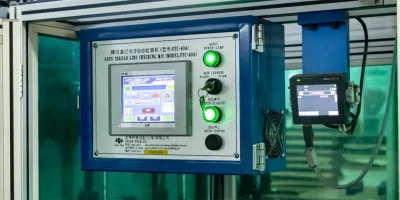
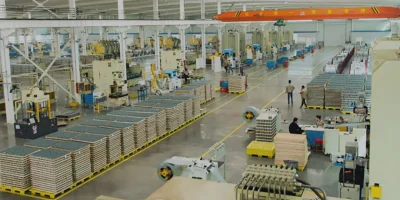
The reality is that the landscape of heavy duty aftermarket filters has evolved significantly. We are no longer talking about cheap, ill-fitting knock-offs. We are talking about precision-engineered components manufactured in the same style of facilities—and often to higher specifications—than the big brand names. At NewLine Filters, we believe transparency is the key to breaking the OEM monopoly.
In this comprehensive guide, we will dismantle the myths surrounding heavy duty aftermarket filters, explain the economics of factory-direct sourcing, and prove why switching to NewLine is not a compromise—it’s a strategic upgrade.
 1. The “Genuine Part” Myth: Who Actually Makes Your Filters?
 1. The “Genuine Part” Myth: Who Actually Makes Your Filters?
The biggest secret in the heavy equipment industry is that most equipment manufacturers (OEMs) do not manufacture their own filtration products. Caterpillar, John Deere, and Case are engineering marvels when it comes to engines and hydraulics, but they are not paper mills or filtration specialists.
Instead, they contract third-party filter manufacturers (like Donaldson, Mann+Hummel, or specialized factories like NewLine) to produce filters to their specs. These filters are then painted yellow, branded with a logo, and marked up by 300% to cover the costs of dealerships, marketing, and corporate overhead.
When you purchase heavy duty aftermarket filters from a reputable factory-direct supplier, you are often buying a product that utilizes the exact same media technology and construction methods as the “Genuine” part, simply without the licensing fee. The metal doesn’t know what color it’s painted; the engine only cares about the cleanliness of the oil.
2. Technical Parity: Measuring Performance, Not Brands
A brand name is not a technical specification. To truly compare an OEM filter against a NewLine replacement, you must look at the data sheet. The three critical metrics that define filter quality are:
- Micron Rating: The size of particles the filter captures.
- Beta Ratio (Efficiency): The percentage of particles captured at that micron rating.
- Dirt Holding Capacity: How much contaminant the filter can hold before reaching bypass pressure.
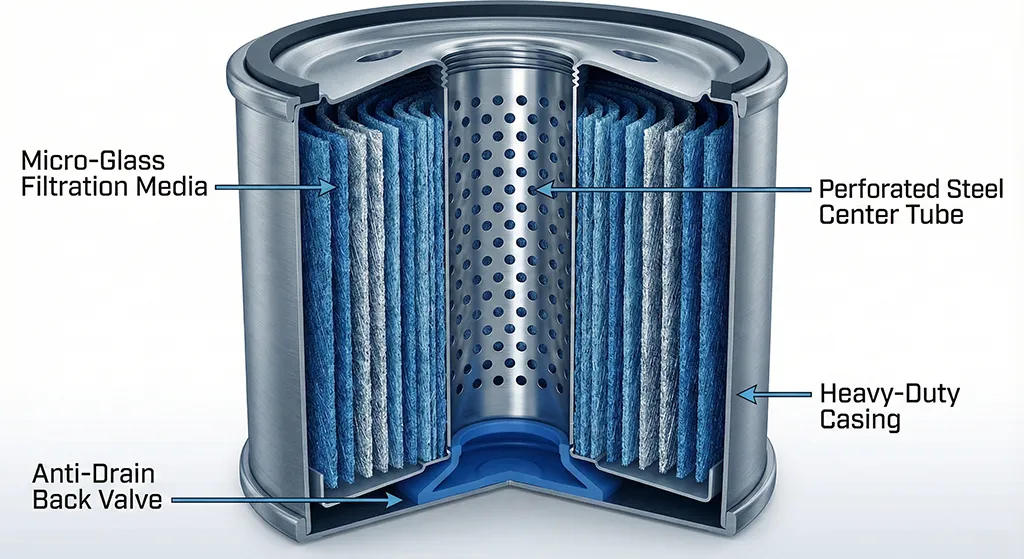
Our hydraulic filter elements are engineered using multi-layered micro-glass media that meets or exceeds the Beta 1000 standard. This means that for high-precision hydraulic circuits—like those found on modern excavators with Rexroth pumps—our filters provide the exact cleanliness levels required to prevent cavitation and valve stiction.
Similarly, our radial seal air filter elements utilize advanced urethane seals that maintain flexibility in extreme temperatures, ensuring no dust bypasses the filter housing. We don’t just copy the dimensions; we replicate the performance curve.
3. The Warranty Fear: Will Aftermarket Parts Void My Warranty?
This is the most common question we receive: “Will using NewLine filters void my machine’s warranty?” The short answer is NO.
In the United States, consumers are protected by the Magnuson-Moss Warranty Act. This federal law prohibits manufacturers from conditioning their warranties on the use of a specific brand of parts unless those parts are provided for free. You have the legal right to use high-quality heavy duty aftermarket filters without fear of losing your warranty coverage.
For a detailed breakdown of your rights under this act, you can reference the FTC’s Business Person’s Guide to Federal Warranty Law. The burden of proof is on the manufacturer to prove that the aftermarket part caused the failure. Because NewLine filters are manufactured to meet OEM specifications for burst pressure and flow rates, this is a claim they cannot substantiate.
4. The Economics of Factory-Direct Sourcing
Why are OEM filters so expensive? It’s not just the quality; it’s the supply chain.
- OEM Model: Factory -> Regional Hub -> National Distributor -> Local Dealership -> You. (Every step adds 20-30% margin).
- NewLine Model: Factory -> You.
By cutting out three layers of middlemen, we can offer premium spin-on lube filters and fuel separators at a fraction of the cost. For a fleet of 50 trucks or excavators, this price difference translates to tens of thousands of dollars in annual savings—capital that can be reinvested into new tires, operator training, or business expansion.
5. Specific Applications: Where Quality Matters Most
Not all aftermarket parts are created equal. While you might risk a cheap cabin air filter, you should never compromise on critical systems.
High-Pressure Hydraulics
Modern hydraulic systems operate at pressures exceeding 5,000 PSI. A cheap, thin-walled filter canister will ballon and burst under these conditions. NewLine’s high-pressure hydraulic spin-on filters are tested to withstand these spikes, ensuring safety and reliability.
Fuel Water Separation
With the rise of Common Rail Injection systems, water is the enemy. It destroys injector tips and causes rust. Our spin-on fuel filters utilize specialized hydrophobic media to strip emulsified water from diesel fuel, protecting your Tier 4 Final engines from costly repairs.
Conclusion: Make the Switch to Data-Driven Procurement
The era of blindly trusting the OEM logo is over. Today’s fleet managers are data-driven, cost-conscious, and technically savvy. They understand that heavy duty aftermarket filters—when sourced from a reputable manufacturer like NewLine—offer the perfect balance of performance and value.
We invite you to stop paying for the paint color and start paying for the filtration. Test our filters against the “Genuine” brand. Cut them open. Check the oil analysis. You will find that NewLine delivers the reliability you demand, with the savings your business deserves.
Frequently Asked Questions
Are aftermarket filters as good as OEM?
How do I cross-reference my OEM part number?
Start Saving on Fleet Maintenance
Stop overpaying for the OEM logo. Find your exact factory-direct match now.