
Heavy Duty Filter Testing: The Science Behind OEM Reliability
The Science of Reliability: Heavy Duty Filter Testing Standards Explained
In the heavy-duty aftermarket industry, the word “quality” is often thrown around without data to back it up. For a fleet manager or a mining operations director, a filter that “fits” is not the same as a filter that performs. The difference between a profitable quarter and a catastrophic season often comes down to the integrity of a $20 part protecting a $50,000 engine.
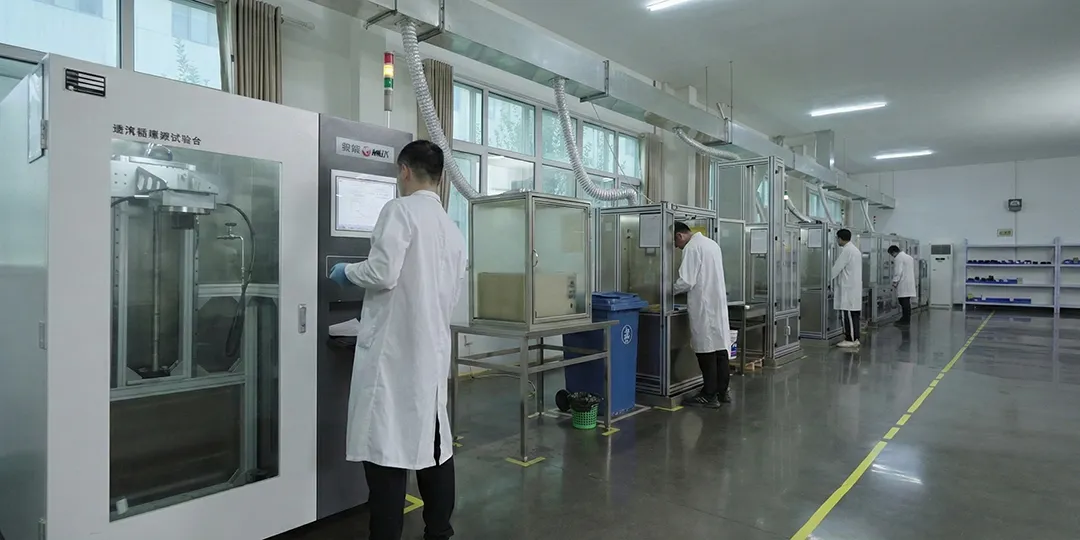
At NewLine Filters, we believe that trust is built on transparency and rigorous data. We don’t just manufacture filters; we subject them to a battery of destructive and non-destructive analyses. This commitment to heavy duty filter testing is what separates a factory-direct manufacturer from a simple re-seller.
In this engineering deep-dive, we are opening the doors to our Quality Control laboratory to explain the specific ISO standards we use to validate every batch. We will explore how we measure efficiency, capacity, and structural integrity, ensuring that when you install a NewLine filter, you are installing OEM-grade protection.
Why Standardized Heavy Duty Filter Testing Matters
Modern hydraulic systems and diesel engines operate under tighter tolerances than ever before. Clearances in high-pressure fuel pumps can be as small as 2-3 microns. A single unseen manufacturing defect or a variance in filter media density can allow abrasive particles to wreak havoc on these sensitive components.
To combat this, the International Organization for Standardization (ISO) has developed specific protocols that all reputable manufacturers must follow. These are not optional guidelines; they are the physics of filtration. By adhering strictly to these protocols, we ensure that our hydraulic filter elements perform predictably under real-world stress.
1. The Multipass Test (ISO 16889): Measuring Efficiency
The most critical metric for any hydraulic filter is the Beta Ratio. This is determined through the ISO 16889 Multipass Test. This test is the industry benchmark for evaluating the filtration performance of a fine filter element.
How the Test Works:
During this procedure, hydraulic fluid contaminated with a specific concentration of ISO Medium Test Dust is circulated through the filter circuit at a constant flow rate. Sensors quantify the number of particles upstream (before the filter) and downstream (after the filter).
The Beta Ratio Calculation:
The Beta Ratio is calculated by dividing the upstream particle count by the downstream particle count for a specific micron size (x).
Beta(x) = Upstream Count / Downstream Count
For example, if 100,000 particles measuring 10 microns enter the filter, and only 100 particles exit, the Beta Ratio is 1000 (100,000 / 100). This translates to 99.9% efficiency. If a supplier cannot provide you with the Beta Ratio derived from heavy duty filter testing, they are asking you to gamble with your machinery.
2. Collapse and Burst Pressure Verification (ISO 2941)
Filtration efficiency means nothing if the filter physically collapses under load. In heavy construction machinery, hydraulic circuits frequently experience massive pressure spikes—often known as “water hammer”—when a cylinder reaches the end of its stroke or when a load is dropped suddenly.
The Risk of Collapse:
If the differential pressure across the filter element exceeds its structural rating, the center tube can crush, or the pleats can fold over. This leads to a “blowout,” where the filter releases all its captured dirt back into the system in a concentrated sludge. This is often an instant death sentence for hydraulic pumps.
To prevent this, we subject our high-pressure hydraulic spin-on filters to the ISO 2941 Collapse/Burst pressure test. We pump fluid into the assembly until the differential pressure exceeds the maximum operating limit, verifying that the steel center tube and the media pack remain intact even under extreme stress.
3. Fabrication Integrity and Bubble Point (ISO 2942)
Before a filter design enters mass production, and during random spot-checks, we utilize the Bubble Point Test (ISO 2942). This is a fabrication integrity test designed to find leaks or defects in the element’s seams or end-cap bonding.
The filter element is submerged in a wetting liquid, and air pressure is applied to the inside of the element. We slowly increase the pressure and watch for the first stream of bubbles. The pressure at which the first bubble appears allows us to calculate the size of the largest pore in the media. This confirms that the media has not been damaged during the pleating process and that the adhesive seals are airtight. You can read more about the specifics of ISO 2942 on the official ISO website.
4. Impulse Fatigue Testing for Durability
Static pressure is one thing; dynamic cycling is another. A filter on an excavator or a mining haul truck vibrates constantly. The pressure inside the can fluctuates thousands of times per shift. This cyclic stress can cause metal fatigue, leading to cracks in the filter canister or thread failure on the baseplate.
Our heavy duty filter testing regime includes impulse fatigue analysis. We cycle the pressure inside our spin-on lube filters from 0 to their rated max pressure hundreds of thousands of times. This validates the seam integrity of the canister and the strength of the baseplate threads, ensuring they won’t crack 500 hours into a job site operation.

5. Material Compatibility and Flow Fatigue
Finally, we must ensure that the materials used in the filter are compatible with the fluids they will encounter. This is particularly relevant for modern synthetic hydraulic fluids and biodiesel blends, which can be chemically aggressive toward certain rubber seals and adhesives.
We test our gaskets and O-rings for swelling, hardening, and degradation. Furthermore, we evaluate flow fatigue to ensure the flow resistance (Delta P) remains within acceptable limits. This is crucial for our spin-on fuel filters, where flow restriction can starve the engine, leading to power loss and injector cavitation.
Conclusion: The ROI of Validated Filtration
When you choose a replacement filter, you aren’t just buying a metal can filled with paper; you are buying an insurance policy for your equipment. By rigorously adhering to heavy duty filter testing standards, NewLine Filters bridges the gap between aftermarket pricing and OEM peace of mind.
We invite fleet managers and mechanics to compare our specs. You will find that our commitment to engineering excellence allows you to lower your maintenance costs without lowering your standards.
Frequently Asked Questions
- What is the difference between nominal and absolute efficiency?Nominal efficiency is an arbitrary value (e.g., “50% of particles”), whereas absolute efficiency (beta rating) represents a specific, measurable removal rate (usually 98.6% or higher) at a specific micron size, verified by lab testing.
- How often do you perform these ISO tests?We perform batch testing on every production run. Additionally, we conduct full rigorous destructive testing (Burst/Collapse) whenever we introduce a new material supplier or design change.
Verify Your Part Numbers Now
Ensure your fleet is protected by scientifically validated filtration. Use our search tool to find the exact NewLine equivalent for your machinery.